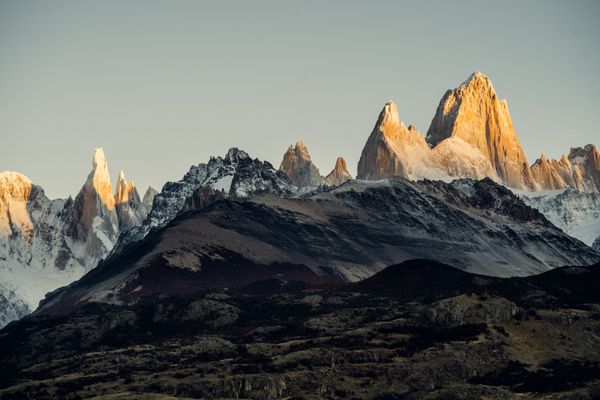
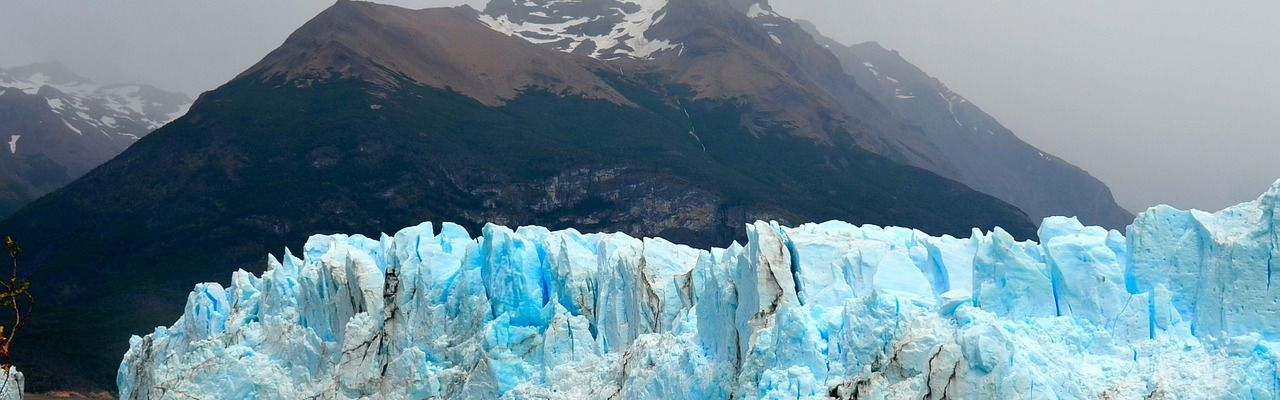

The Perito Moreno Glacier is the most visited ice front in Patagonia and, for a lot of travellers, the reason El Calafate is on the itinerary at all. It sits inside Parque Nacional Los Glaciares, in Santa Cruz province, and you can see it from walkways, from the water, or by walking on the ice itself.
It is also, and this is worth saying early, one of the busiest places in southern Argentina. You will not have it to yourself. Almost nobody regrets going anyway, and there are concrete reasons for that.
This guide covers the practical side: when to go, how to get there, how much time to give it, the real difference between the walkways, the boat and the ice trek, and what else is in the park once you have seen the glacier.
Where it is, and why this glacier behaves differently
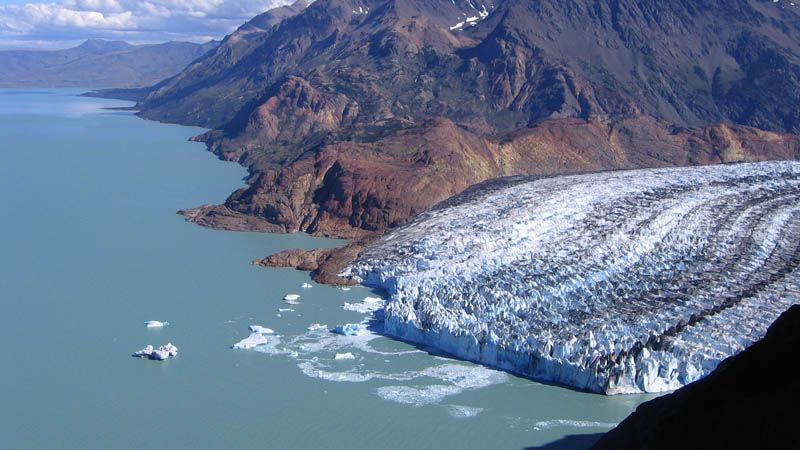
Perito Moreno flows off the Southern Patagonian Ice Field into the arm of Lago Argentino known as the Canal de los Témpanos, inside Parque Nacional Los Glaciares.
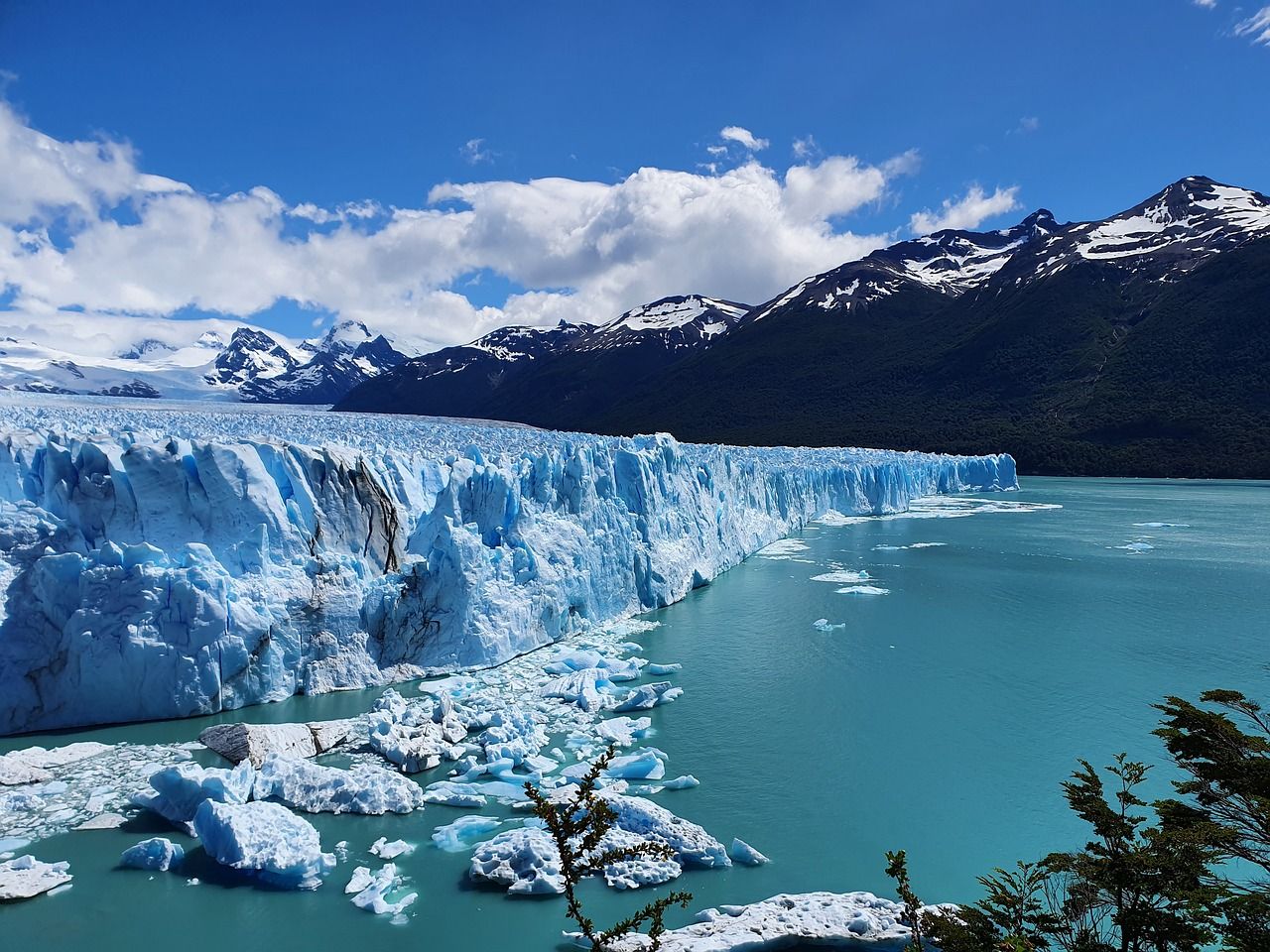
The numbers help place it: roughly 30 kilometres long, around 250 km² of surface, and a 5-kilometre front rising as much as 60 metres above the water. Sixty metres is a twenty-storey building, and you are looking at it from a wooden walkway at eye level.
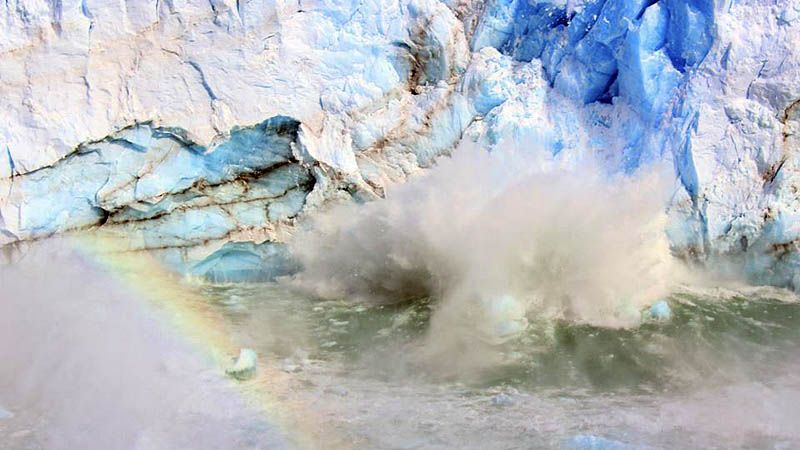
What makes it unusual, though, is not its size. It is that the ice front reaches the far shore and presses against the Península de Magallanes, forming a dam that cuts the lake arm in two. The water trapped on one side rises, pushes, opens a tunnel under the ice, and eventually brings down the arch left standing above it. That is the famous rupture: it happens every four or five years, with no announced date and no warning far enough ahead to build a trip around.
The rest of the time the glacier does what glaciers do, except in front of you and in plain sight: it cracks, splinters and drops blocks into the channel. That sound is what surprises visitors who arrive expecting a postcard. You hear it before you see it, and it resembles nothing else.
When to travel to Perito Moreno Glacier
The window we recommend for southern Patagonia is from October to April, and more precisely from mid-October to mid-April: more hours of daylight, better conditions, and all excursions operating.
Within that window, January and February concentrate the largest number of people. November and March are quieter and the landscape is exactly the same.
The glacier can also be seen in winter. Days are short, the cold is real, and some excursions have a shorter season, but the snow-covered, queue-free walkways offer something that summer doesn't. It's a decision about what you prefer to give up.
Regarding detachments, the honest answer is that they are not scheduled. They occur all year round, at any time, and the only way to improve your chances is to stay still on the walkways instead of moving quickly. Those who see a large block fall are usually the ones who have been sitting and watching for a long time.
And one detail worth mentioning: the seasons are inverted between the northern and southern hemispheres. Travelers from the northern hemisphere plan summer for July and August, but in Patagonia, these are the coldest and darkest weeks of the year.
How to get there and what you need to enter
It all starts in El Calafate. The city has an airport with direct flights from Buenos Aires, about three and a half hours flight, and from there to the park you arrive by paved road.
Three ways to do that stretch:
Regular excursion. The most common: transfer, scheduled time on the walkways and return. The Perito Moreno Glacier excursion is usually combined with a navigation on the same day.
Private excursion: Provides greater exclusivity, private vehicle, driver and guide for the group. Allows coordinating and adjusting pickup times, and going at your own pace. Works very well for families or groups of friends.
Rented car. Gives freedom of schedules, which in this place is worth more than it seems: you can stay until the light changes.
Regular transport. Departs from El Calafate terminal and works well if you travel on a tight budget.
The entrance to Los Glaciares National Park is paid separately and it is advisable to buy it online before getting into the vehicle. The fees for Argentine national parks range from USD 25 to 40 depending on the park and are charged in pesos, so the official fee chart is the only place where the number is updated. In all our trips, National Park entrances are already included.
El Calafate is the base for all of this, and also for the rest of the park.
The walkways: the main event
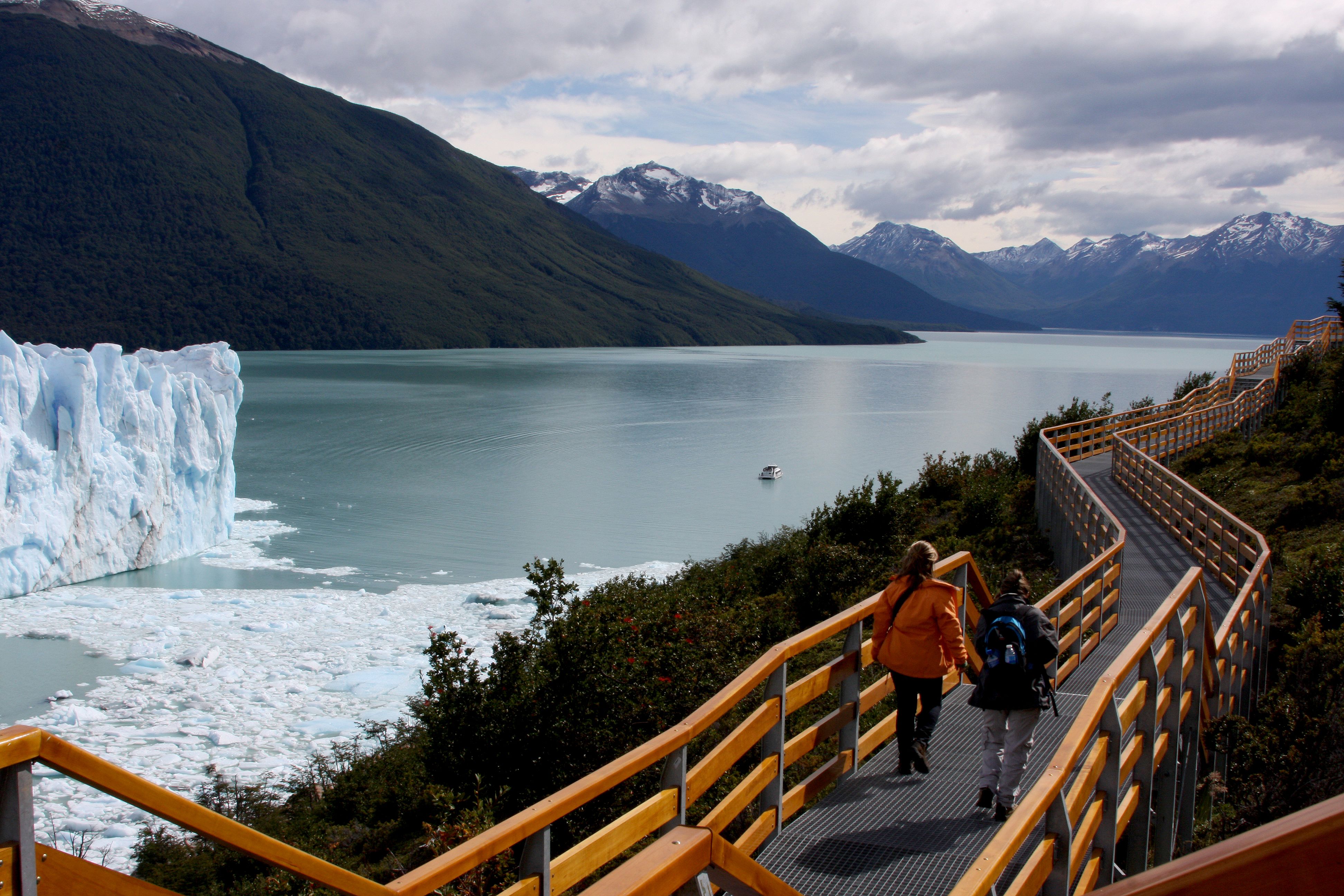
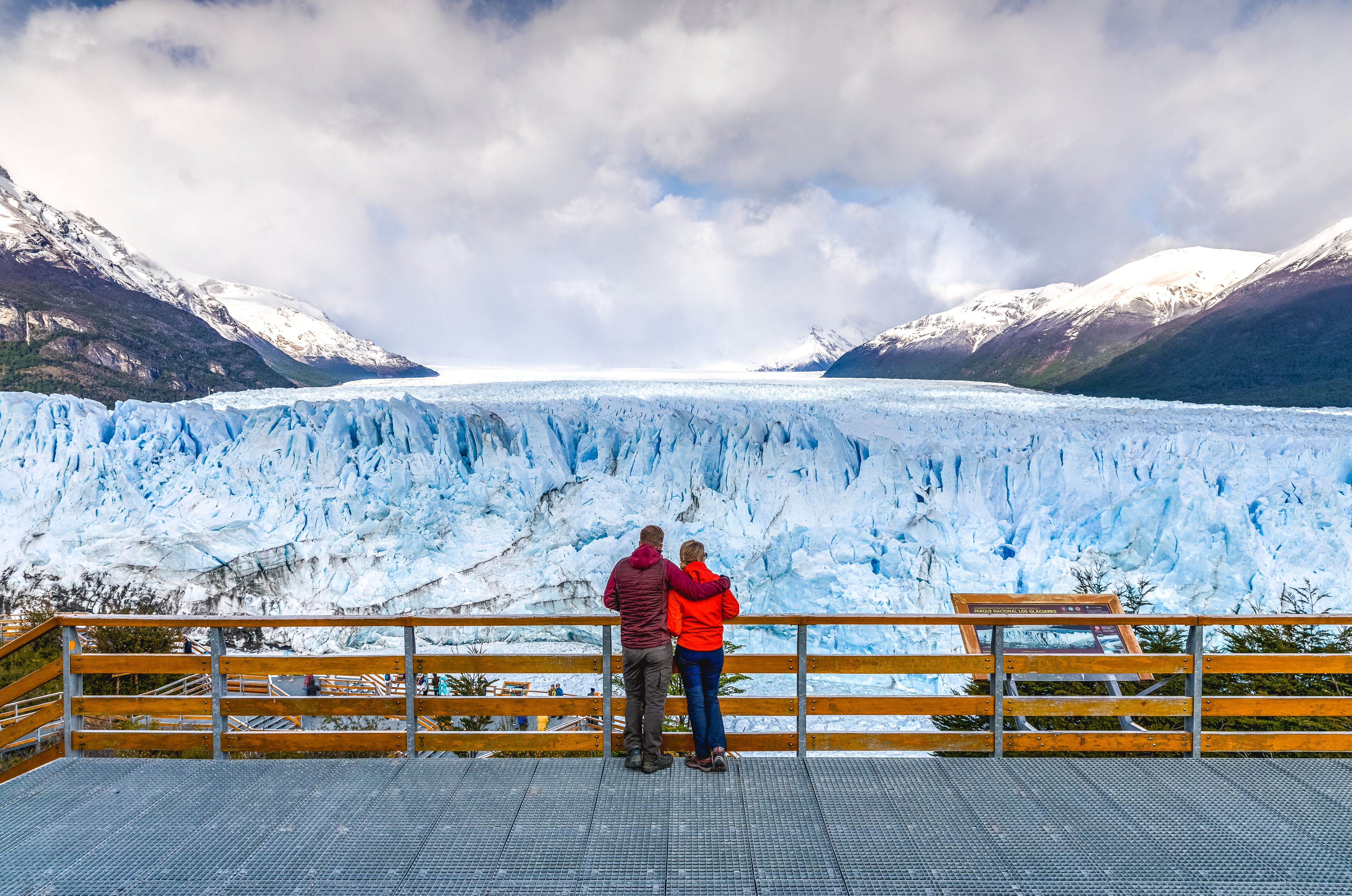
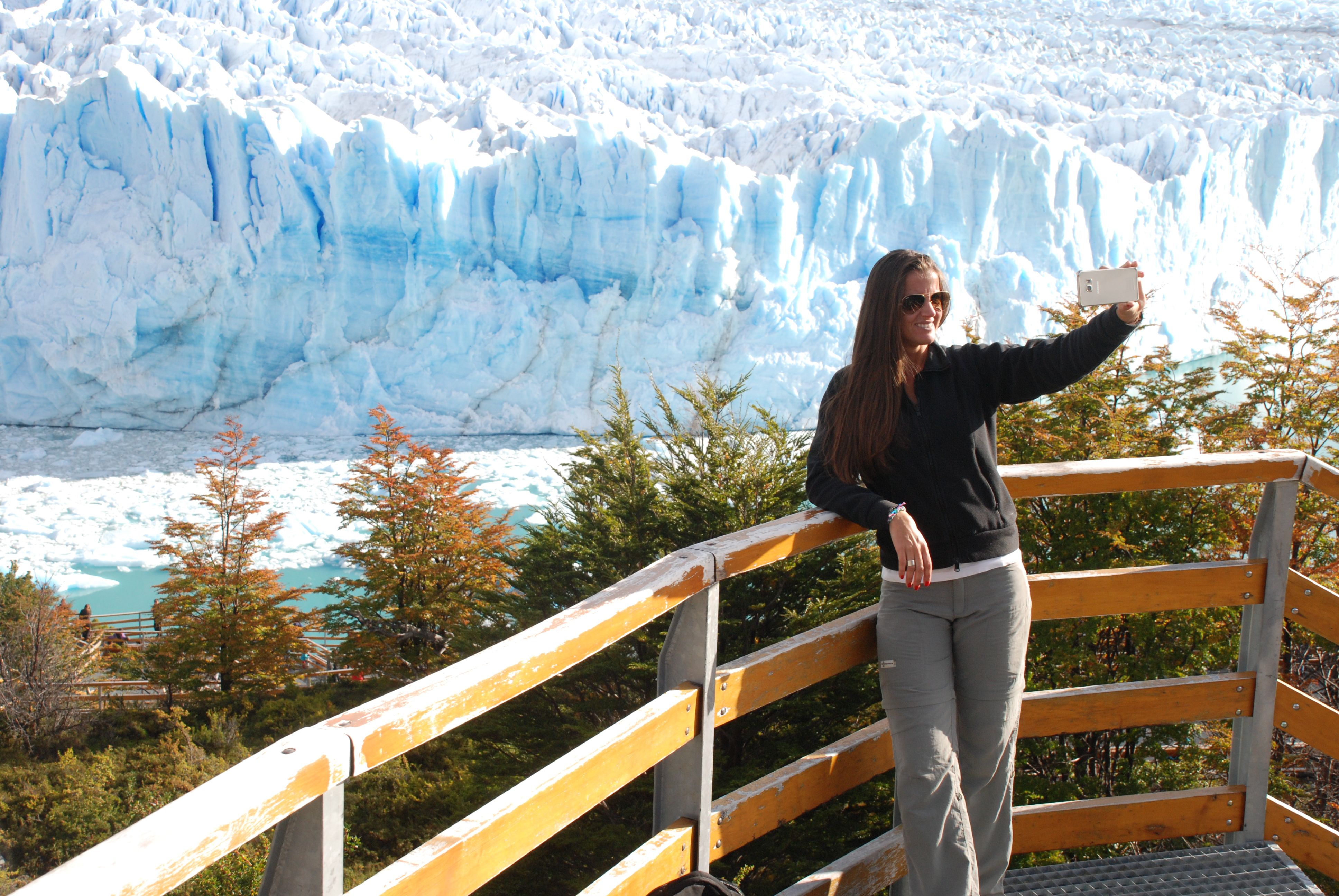
The walkway system runs along the Península de Magallanes, facing the ice front, and it is what makes this place different from almost any other glacier in the world. You reach it on foot, with no equipment, no guide and no effort.
There are several circuits of varying difficulty, from short accessible sections to staircases dropping towards the lower viewpoints. They combine well into one long morning.
The most common mistake is treating them as a viewpoint rather than as a visit. Plenty of people arrive, take their photographs from the main balcony and are back at the vehicle in forty minutes. The walkways give their best when you stay: the light changes, the front looks completely different from each level, and the calving happens when it happens.
Bring a warm layer even on a good day. The air coming off the ice is considerably colder than the air in the car park, and there is nowhere on the walkways to get out of the wind.
Three ways to get closer to the ice
The walkways put you opposite the glacier. To get closer there are three options, and each one suits a different kind of visitor.
The boat trip
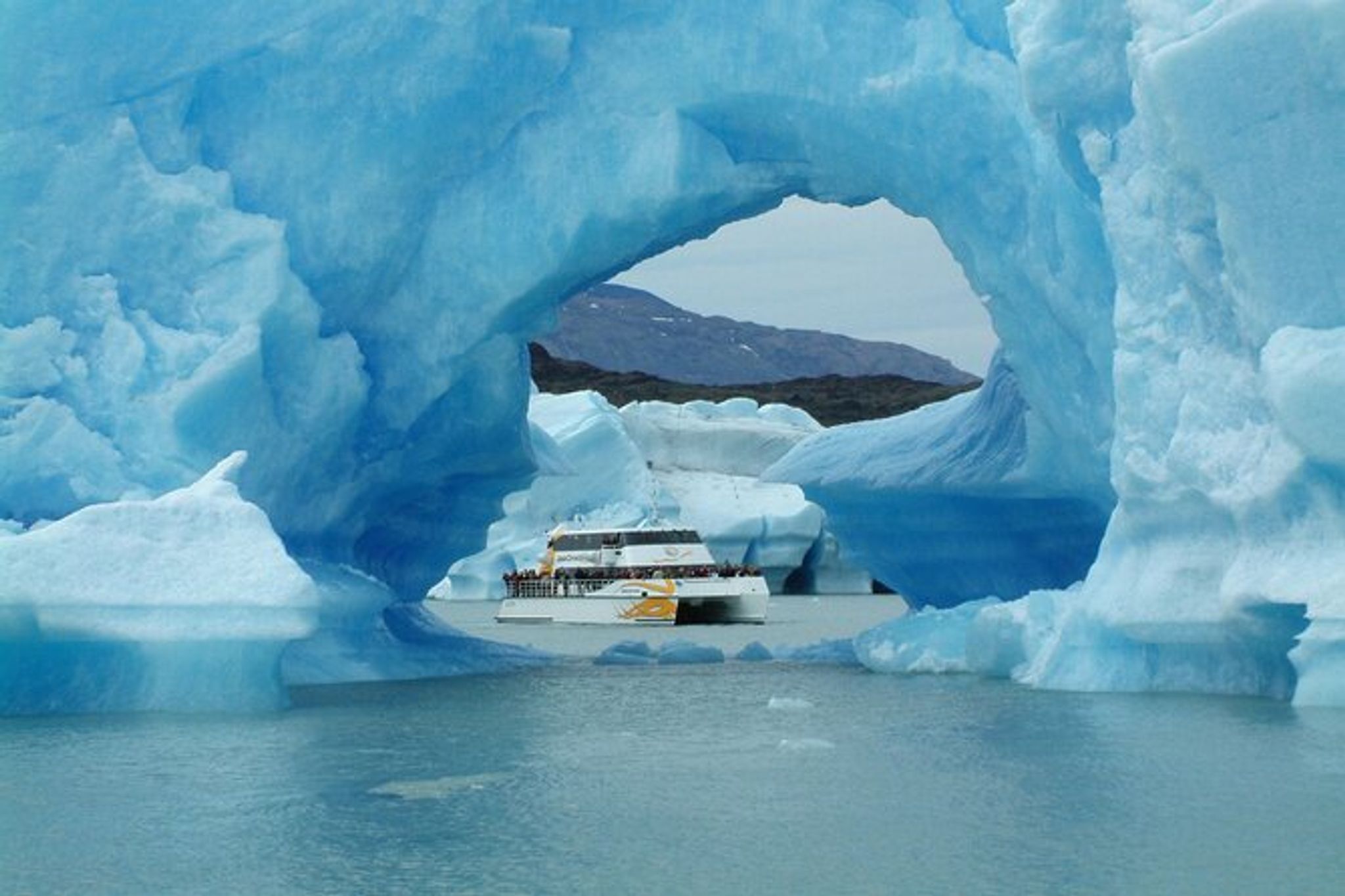
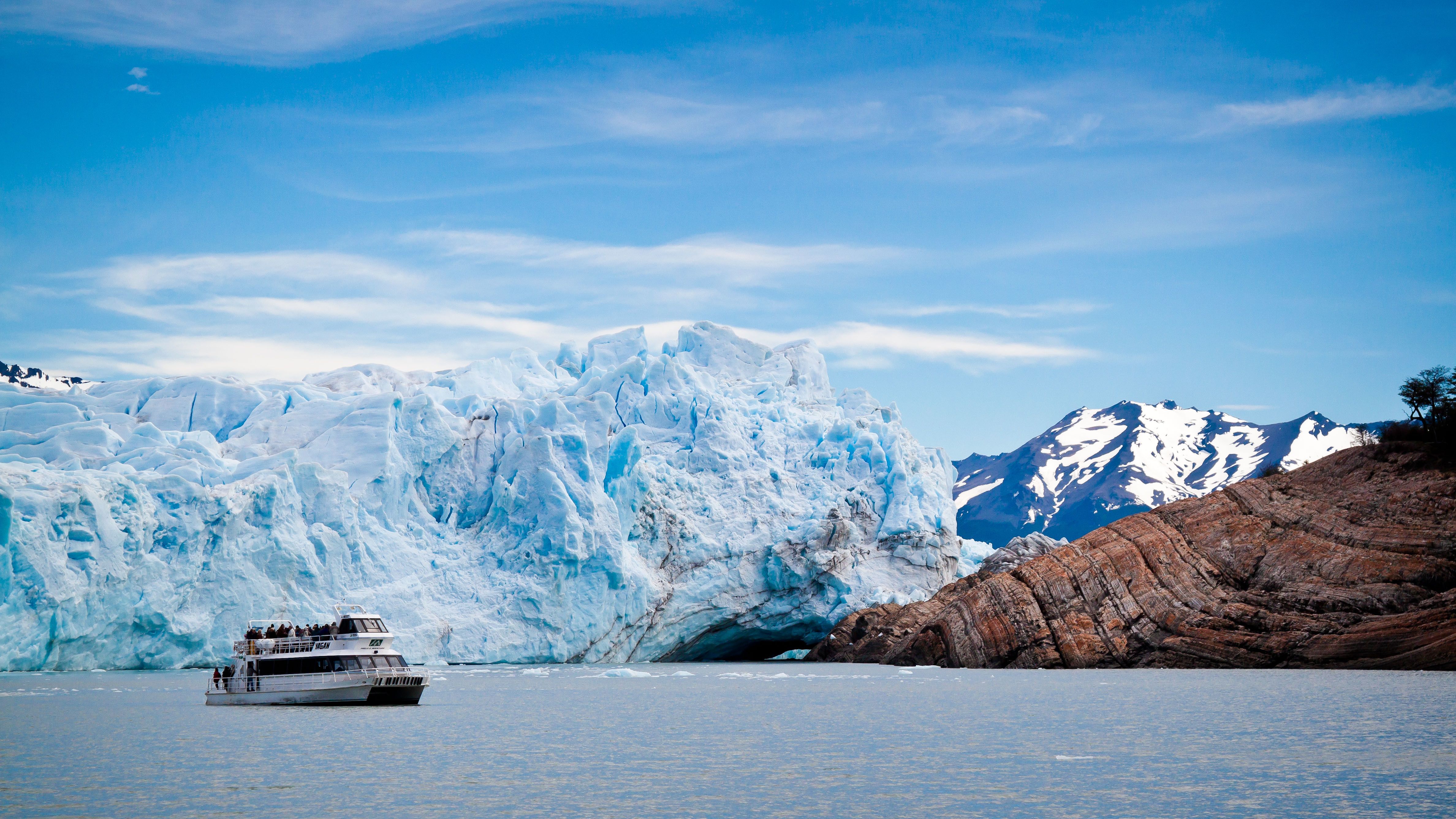
Catamarans leave from the port a few minutes from the walkways and approach the ice wall from the water. From there the scale reads differently: the front stops being a backdrop and becomes a wall that blocks out the sky.
It is the simplest option and it works for almost everyone, children and older travellers included. It is a short outing and it combines well with the walkways on the same day. If you can only add one thing to the walkways, for most people this is it.
Ice trekking on the glacier
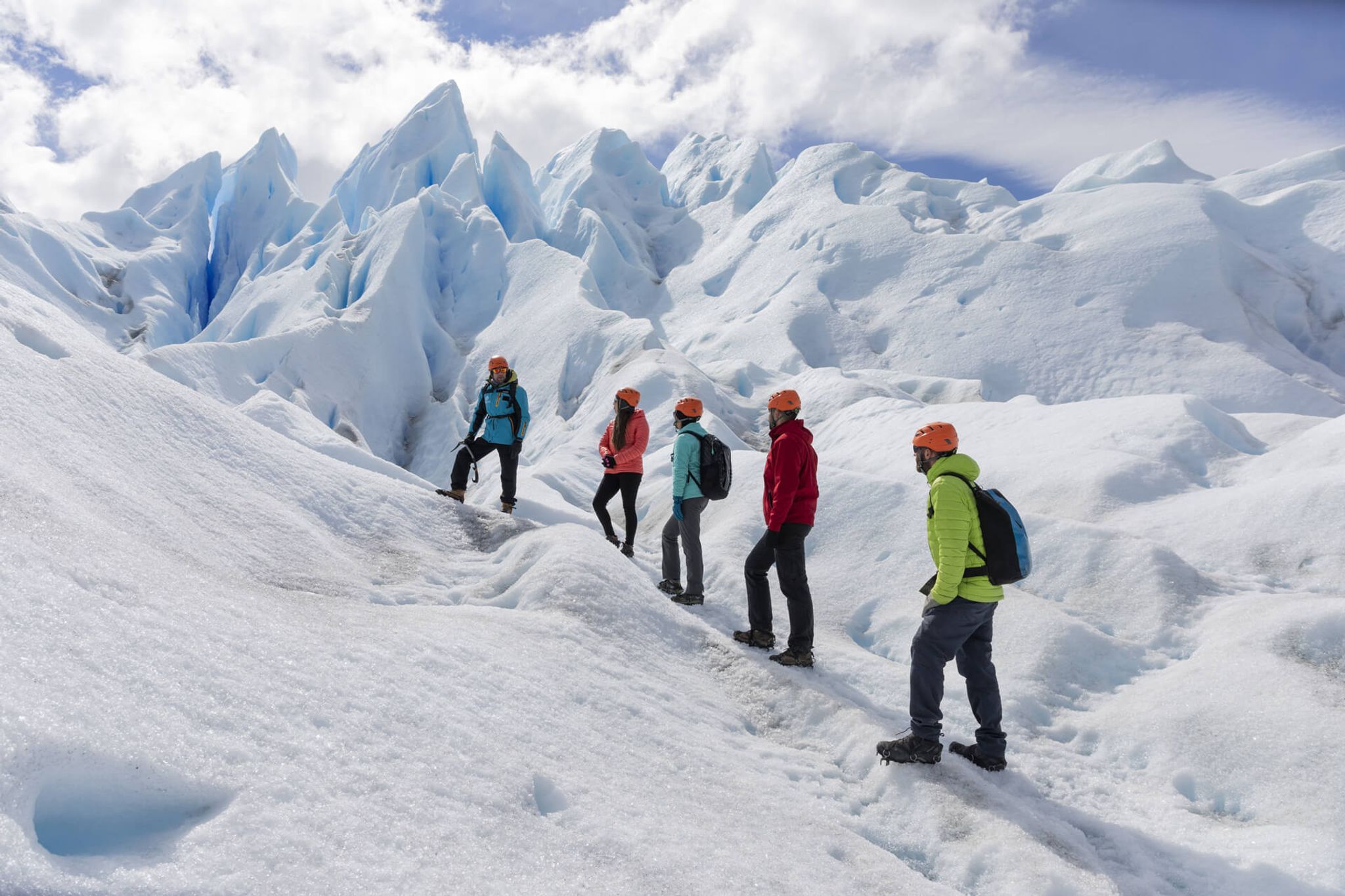
Walking on the glacier in crampons is a completely different experience from looking at it. When a traveller hesitates, the team explains it with a comparison that usually settles the question: going to Perito Moreno and not stepping on it is like going to Paris and not going up the Eiffel Tower.
Up on the ice you find what the walkways cannot show you: the crevasses, the pools in a blue that does not look real, the moulins where meltwater disappears into the glacier. It is a long day, with a short boat crossing, an approach walk over the moraine, and only then the crampon section, guided in small groups.
And it is not for everyone, which is worth knowing before you book rather than the night before: ice trekking on the glacier carries age limits and fitness requirements. If the whole group does not qualify, the boat trip is the alternative that leaves nobody out.
Kayaking in front of the glacier
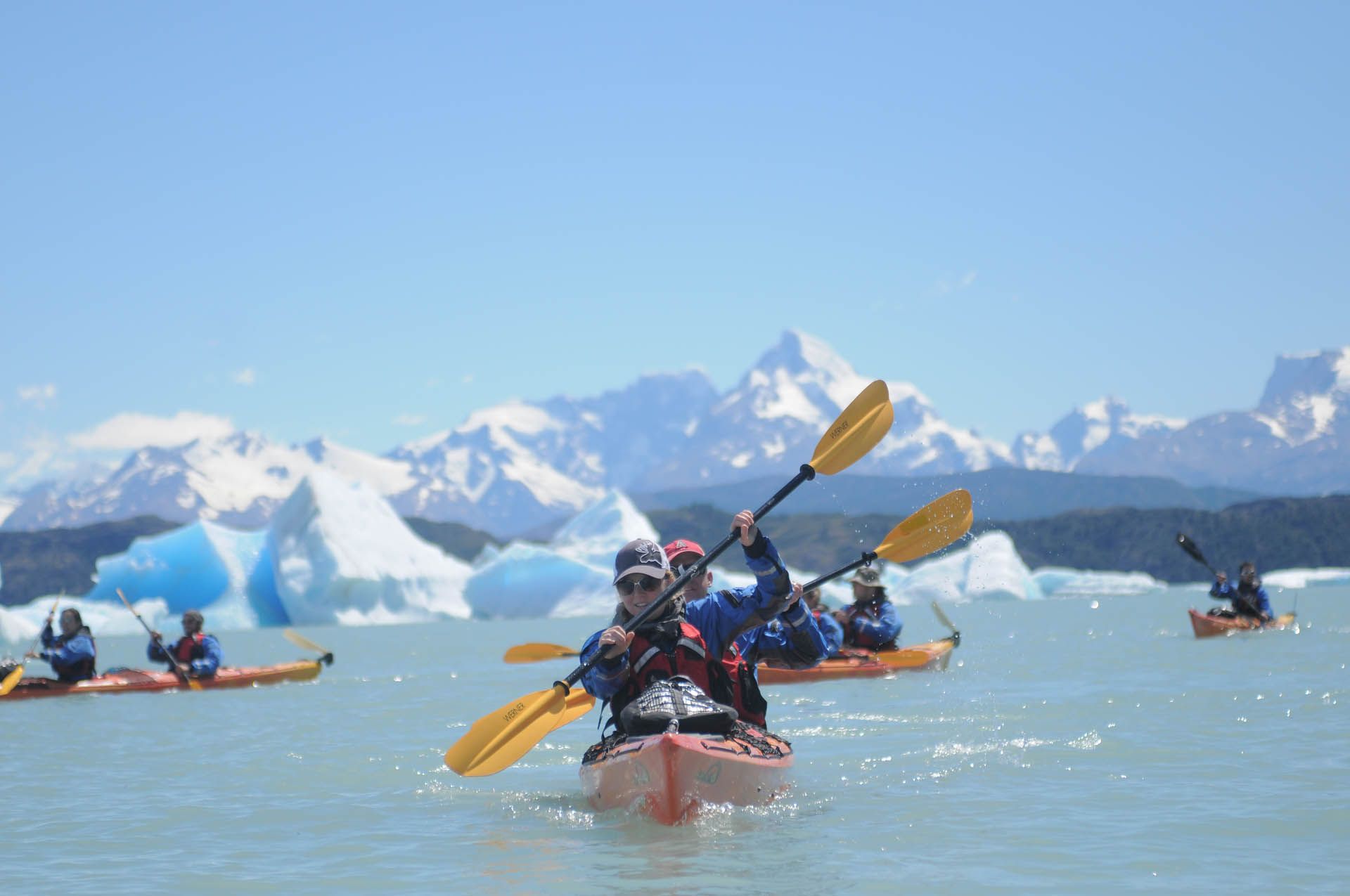
The quiet version. You paddle the channel with the ice front ahead and icebergs around you, in small guided groups. No previous experience is needed, though a willingness to get slightly wet helps.
It tends to be chosen by people who have already seen the glacier from the walkways and from the catamaran and want a third way of being there: no engine, at water level, listening to the ice with nobody talking over it.
How many days do you need in El Calafate
Two full nights is the reasonable minimum. Three are better.
One day is enough for the glacier: walkways plus navigation, or walkways plus ice trekking. Both combinations work; doing all three things on the same day does not.
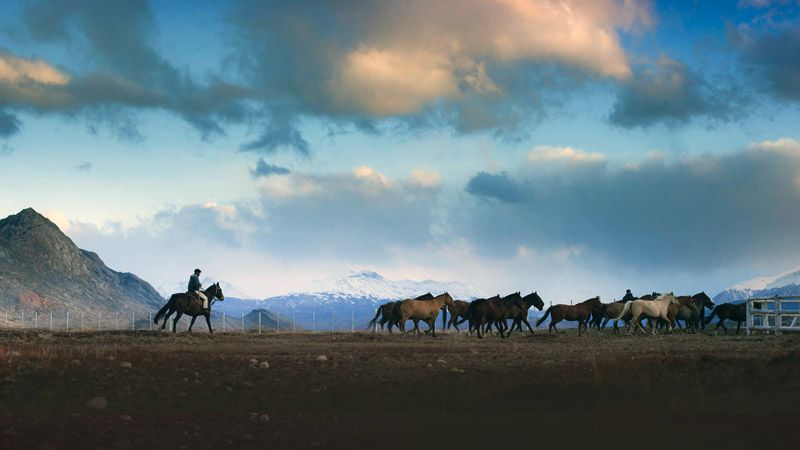
A second day opens up the rest of the park, allowing you to navigate the entire length of Lake Argentino to see glaciers inaccessible otherwise, the steppe, or a typical Patagonian ranch.
A third day is what enables you to visit El Chaltén, although it's a three-hour drive each way and is much more enjoyable staying overnight there than going and returning.
Our getaway to El Calafate and Perito Moreno Glacier solves this part in five days from Buenos Aires, starting from USD 1,700 per person. This is an initial price, not a final price: it varies with the season, hotel category, and number of passengers.
Where to stay to visit the glacier
Almost everyone sleeps in El Calafate and not in the park. Inside Los Glaciares National Park there are no hotels facing the glacier, so the city is the actual base for the visit.
On the main avenue. Everything within walking distance: restaurants, agencies, currency exchange offices. It's practical if you arrive late and leave early, which is exactly what usually happens.
On the way up to the hill. Views of Lake Argentino and more silence, in exchange for an uphill walk when returning from dinner.
Estancias and lodges outside the city. Nicer and generally a bit more expensive. Some of them offer complimentary round-trip transfers to the center, and also offer a restaurant in the same hotel.
There's a logistical detail that often surprises: almost all glacier excursions pick you up at the hotel and gather passengers around the city before heading out on the road. If you stay far from the center in the direction of the airport, that preliminary journey happens first and takes a long time. With such early departures, sleeping centrally buys half an hour of sleep per day.Conversely, hotels further away in the direction of the glacier are the last to pick up people on the way out and the first to drop them off on the way back.
The other basic decision is how many nights. El Calafate works very well as a stop for two, three, or even four nights within a larger circuit. It is ideal to combine this destination with El Chaltén, Ushuaia, and/or Torres del Paine.
The rest of Parque Nacional Los Glaciares
Perito Moreno is the accessible glacier. It is neither the only one nor the largest in the park.
Further north, on Lago Argentino, sit the Upsala and the Spegazzini, reachable only by boat. Spegazzini is known for the height of its front; Upsala is seen through drifting icebergs, which on some days are numerous enough to force the boats to change route. Very few visitors to El Calafate ever see either.
On the same arm of the lake is Estancia Cristina, reachable only by water, with views down onto the Upsala glacier and a century of family history in a place with no roads.
If you have a second or third day and you have already seen Perito Moreno, this is the part of the park almost nobody sees. It is also the part that most resembles the Patagonia most people had in mind before they arrived.
It's mass tourism, and still worth it
Here's the honest part.
A good part of what we design as a travel agency specializing in the destination focuses on non-massified places or where there is little tourist impact: the Carretera Austral, Bahía Bustamante, the Esteros del Iberá. The Perito Moreno Glacier is exactly the opposite. Especially during high season it is mass tourism, with full parking lots, crowded walkways, and bus schedules. Pretending otherwise would not be correct.
And yet El Calafate appears in about 60% of our itineraries, just behind Buenos Aires. People ask for it, do it, and return extremely happy.
The explanation is simple: there are very few large glaciers in the world that can be reached by walking on a walkway, in sneakers, without a guide and without risk. The exceptional thing here is the access, not the solitude. Those who travel to Patagonia looking for silence and isolation will find it, but on some trails in El Chaltén, in the steppe or in the rest of this same park. Not on the walkways on a December midday.
There was a client who shyly asked for something special on the day of Perito Moreno. He was going to propose marriage to his partner. Juan coordinated with the guides and the hotel to make it happen without her finding out beforehand. She said yes. It is a crowded place and it is also the place where someone decides to risk something like that, and both things are true at the same time.
What to bring
Layers, and a good waterproof, windproof jacket.
The system that works in southern Patagonia has three parts: a breathable base layer in merino or synthetic, an insulating mid layer in fleece or light down, and a waterproof, windproof outer shell. The shell matters most. The wind is what turns an otherwise mild day cold, and there is no shelter on the walkways.
Add footwear with decent grip (the walkways get slippery in rain or frost), light gloves, a warm hat, UV sunglasses, high-factor sunscreen because the light at this latitude is intense even when the air is cold, and a small daypack.
If you are doing the ice trek, crampons and technical gear are provided by the operator. You supply the clothing and the boots, and that is where it is worth having the good ones.
And one last thing that is not equipment: in El Calafate they say that whoever tastes the calafate berry always returns to Patagonia. You will hear it several times, and at some point in the trip you will buy the jam.
Frequently asked questions
“Above all, I am curious. The best way to recommend a place, a restaurant or a destination is to know it first-hand. That is why I love to travel and research in person, putting my own stamp on each itinerary while respecting every traveller's taste.”